DIGITAL MARKETING
Digital Marketing = Promoting a business using the internet and digital platforms.
Digital marketing is the process of promoting and marketing products, services, or brands through digital platforms and the internet. It helps businesses reach their target audience, communicate with customers, build brand awareness, generate leads, and increase sales through various online channels.
Digital marketing includes activities such as social media marketing, search engine optimization (SEO), search engine marketing (SEM), content marketing, email marketing, online advertising, and website marketing.
In simple words, digital marketing is the use of digital channels and technologies to connect a business with its audience and achieve marketing goals.
Search Engine Optimization
Search Engine Optimization (SEO) is the process of improving a website so that it ranks higher in search engine results pages (SERPs). The higher your website appears in search results, the more likely users are to visit it.
Unlike paid advertisements, SEO focuses on earning traffic naturally by creating valuable content, optimizing website structure, and providing an excellent user experience.
.
Content Marketing
Content Marketing is a digital marketing strategy that focuses on creating and sharing valuable, relevant, and engaging content to attract, educate, and retain a target audience. Instead of directly promoting products or services, content marketing builds trust and encourages potential customers to take profitable actions over time.
Examples of content marketing include blog posts, videos, social media posts, infographics, email newsletters, podcasts, and case studies. When done effectively, content marketing increases brand awareness, improves SEO, drives organic traffic, and helps convert visitors into loyal customers.
Search Engine Marketing
Search Engine Marketing (SEM) is a digital marketing strategy that uses paid advertisements to increase a website’s visibility on search engine results pages (SERPs). Businesses bid on keywords so their ads appear when users search for related products or services on search engines like Google and Bing.
SEM helps businesses reach potential customers quickly, drive targeted traffic, generate leads, and increase sales. Popular SEM platforms include Google Ads and Microsoft Advertising (Bing Ads). Unlike SEO, which focuses on earning organic rankings, SEM delivers immediate visibility through paid campaigns.
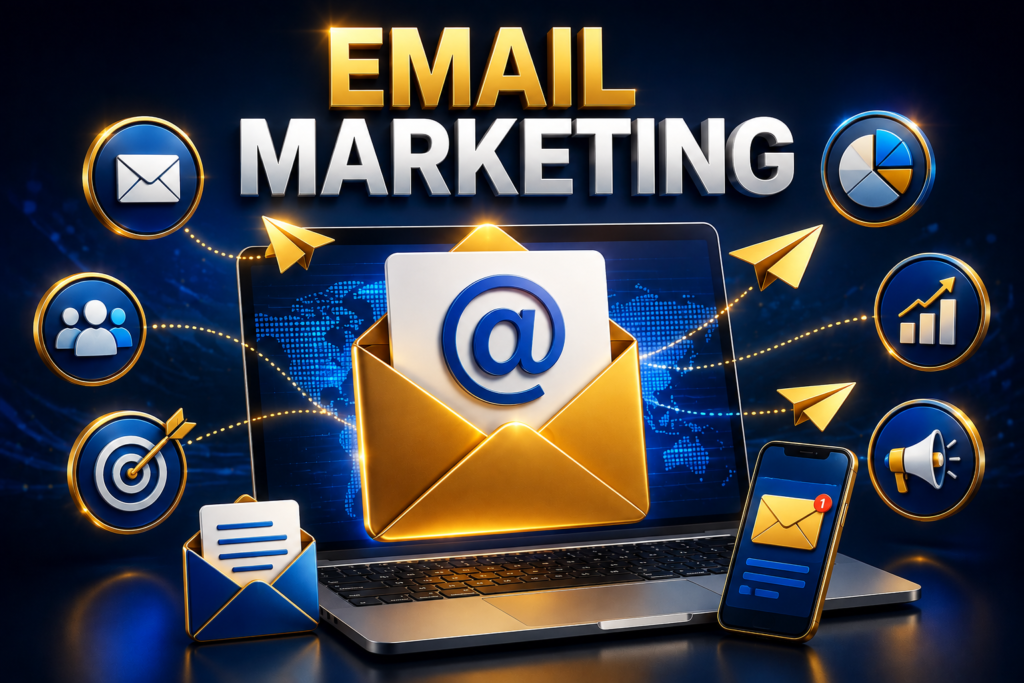
E-Mail Marketing
Email Marketing is a digital marketing strategy that involves sending targeted emails to customers and prospects to build relationships, promote products or services, share valuable information, and encourage actions such as purchases or website visits. It is a cost-effective way to increase customer engagement, generate leads, and improve customer loyalty through personalized and relevant communication.
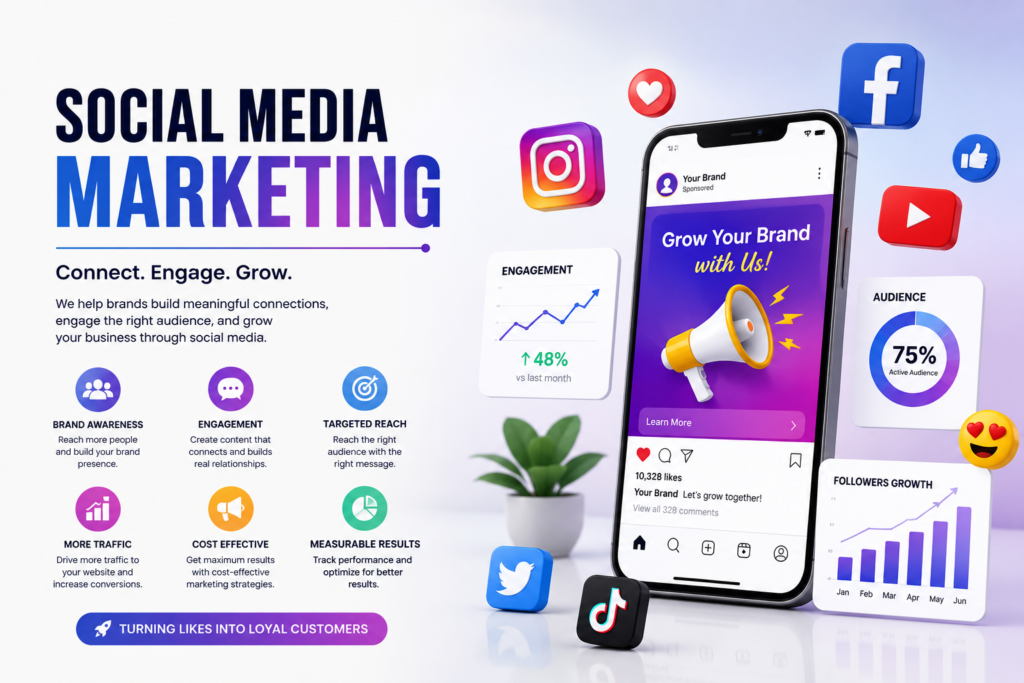
Social Media Marketing
Social Media Marketing (SMM) is a digital marketing strategy that uses social media platforms such as Facebook, Instagram, LinkedIn, X (Twitter), YouTube, and TikTok to promote a brand, product, or service. It involves creating and sharing engaging content, interacting with audiences, and running paid advertising campaigns to increase brand awareness, drive website traffic, generate leads, and boost sales.
By building meaningful connections with customers, social media marketing helps businesses grow their online presence and achieve their marketing goals.
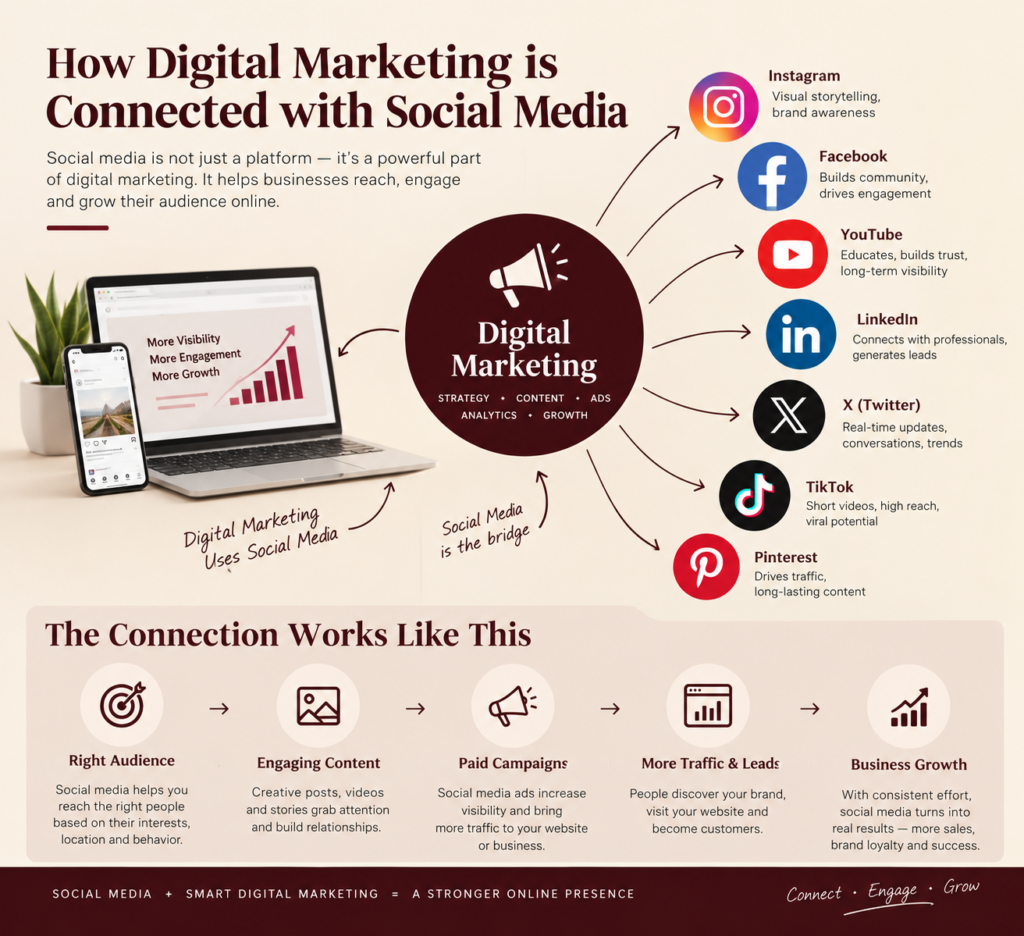
HOW DIGITAL MARKETING IS CONNECTED WITH SOCIAL MEDIA
Digital marketing and social media marketing are closely connected because social media is one of the most powerful channels used in digital marketing to reach, engage, and convert an audience. Businesses use platforms like Instagram, Facebook, YouTube, LinkedIn, TikTok, and Pinterest to promote their products, build brand awareness, and connect with potential customers.
Digital marketing includes different branches(BRANCHES OF DIGITAL MARKETING) strategies such as social media marketing, search engine optimization (SEO), content marketing, email marketing, and paid advertising. Social media supports these strategies by helping businesses share valuable content, increase website traffic, generate leads, and build customer relationships.
How They Work Together
Reach the Right Audience: Social media helps businesses connect with people based on their interests, location, and online behavior.
Create Engaging Content: Posts, videos, stories, and reels attract attention and encourage audience interaction.
Promote Through Paid Campaigns: Social media advertising helps businesses reach specific target audiences and promote their products or services.
Increase Website Traffic: Social media content and advertisements can direct users to a business website or landing page.
Grow the Business: Consistent digital marketing and social media efforts can support brand awareness, customer engagement, lead generation, and sales.